The outside of a car takes most of its wear from two things: winter brine on the lower half, and the wash that's meant to clean it off.
Our exterior car detailing is built around both. We wash by hand in a way that doesn't drag grit across the paint, then put wax or a sealant on top, in driveways across Queens and Nassau County. Most of the time goes on the wheels and lower panels, where the salt sits.
From Gold up, every package does the outside and the inside together, priced by vehicle size on the cards further down, or text us for the outside on its own.
Why the wash matters more than the wax in an exterior detail
Most of the fine circular scratches you see on dark paint in direct sun came from washing. Brushes in an automatic wash touch every car that goes through, and they hold on to some of that grit.
A single sponge at home does the same thing on a smaller scale. It picks up grit from the lower doors and carries it across the hood on the next pass.
Dark colors show it first. Black, navy and deep gray paint can look webbed and dull in the sun after a season of quick washes, while the same marks on silver or white barely show.
Wax can hide a little of that for a few weeks. It can't undo it. Taking out the marks that are already there is paint correction, which is its own job with its own quote.
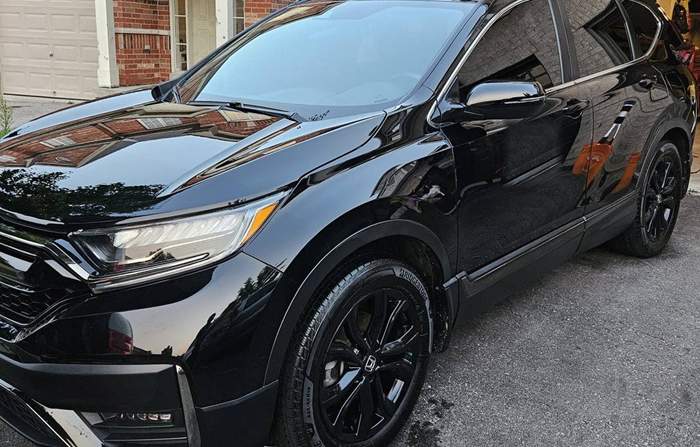
Black paint shows wash marks first; this CR-V's hood reflects the house behind it
A hand car wash and wax that doesn't add new swirls
This is the wash in Gold, Platinum and Showroom, and it's the same on a ten-year-old SUV as on a new sports car. Each habit below is there to keep grit off the paint.
Wheels before paint. Brake dust and salt come off the wheels before any mitt touches the body, so none of it ends up where it can scratch.
Foam that soaks. Thick foam goes over the whole car and sits for a few minutes. It softens grit and road film so they let go before anything touches the paint.
Roof down, never bumper up. The lower panels carry the most grit, and that grit should never reach the roof.
Dried by hand. Soft towels are laid flat and pulled, not rubbed in circles. A car left to dry on its own gets spots, and an old chamois pushes leftover grit around.
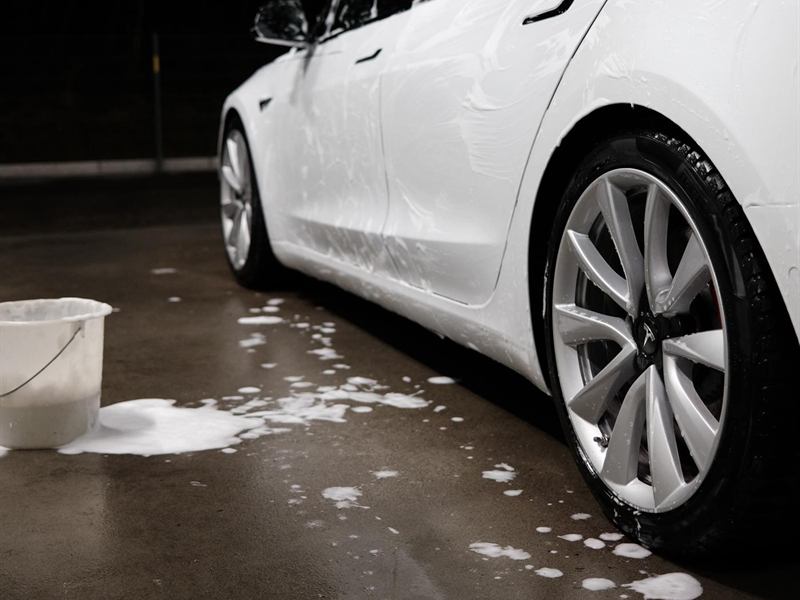
Foam soaking the lower doors before any mitt touches them
Where an exterior detail spends its time: wheels, wells and lower panels
Ahead of some storms, Nassau County's public works crews brine main county roads, bridges and overpasses. The brine dries into a thin, salty film.
A week of wet commutes on the Long Island Expressway, or on Northern Boulevard in Queens, after a storm throws that film up onto the rocker panels, the lower doors, the backs of the bumpers and the inside of the wheel wells. That's where we spend the most time.
In Gold, the wheels and tires are cleaned and the tires dressed. We scrub the sidewalls first, because dressing laid over a dirty tire turns brown and flicks onto the paint.
Showroom goes further. The brushes go past the face of the wheel, into the barrel behind the spokes and around each lug nut, where brake dust bakes on. Then the wheels are sealed, so brake dust and grime have a harder time sticking through the next winter.
Salt under the car needs a lift to reach, so it isn't part of a mobile detail; ask a shop with a lift for an underbody rinse in March.
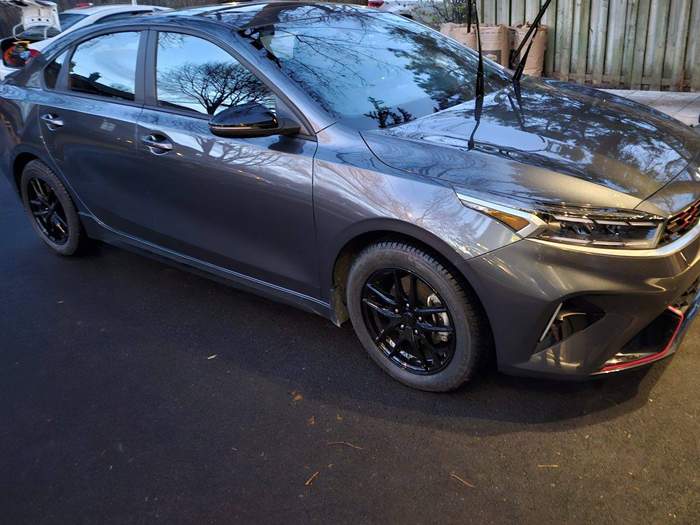
Front wheel and lower doors of a gray Kia Forte after a wash
Wax, sealant or coating: which suits your car
The cards near the top of this page list the three options. Here's how we'd match them to the way a car is actually used.
Carnauba wax suits a garage-kept weekend car. It gets driven on dry days and doesn't sit in slush, and its owner usually likes that warm, deep look enough to have it put back on through the year. Platinum is the package for it.
The ceramic spray sealant suits a car that sits outside all winter, in a Queens building lot, on the street or at a train station. Brine and grime let go of it more easily at the next wash. Showroom also treats the glass so rain beads off it, which you'll notice on a dark, wet drive home on the Expressway.
A ceramic coating suits a car you plan to keep for years, whether it's new or has just had its paint corrected. It's a separate visit with its own quote.
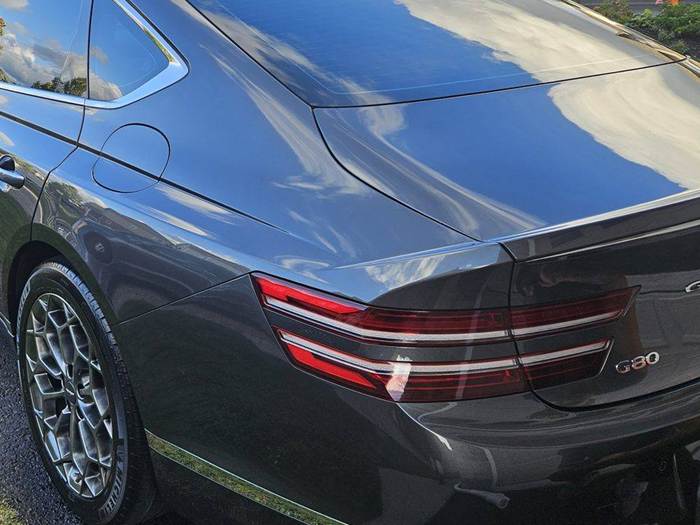
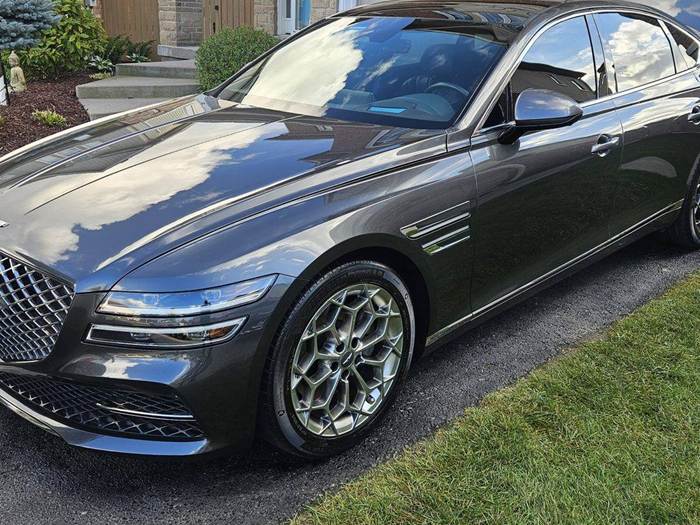
Clouds reflected in the rear quarter of a gray Genesis G80
Clay bar: when the paint still feels rough
Put your hand in a thin plastic sandwich bag and run it over the hood after a wash. If it feels gritty, something is bonded to the paint, usually fine brake dust, road grime or specks of overspray that a wash slides right over.
We mist the paint with a lubricant and work the clay across it, and the clay picks those bits up. Afterward the paint feels smooth under your hand, and wax or sealant goes on evenly and holds better. In Showroom, the clay goes on before the polishing machine comes out.
Most cars don't need clay at every visit. Once or twice a year is plenty for a daily driver.
Clay also has a limit: it can't take out scratches or spots etched into the clear coat. Those need a polish.
A gray Genesis G80 hood after a wash, clouds reflected in the paint
Rain, fresh protection and the best months on Long Island
Rain in the first hours can spot a fresh sealant before it has set, so the outside work wants a dry spell, not just a dry morning. If one isn't coming, we text you to pick another day. What cold weather changes about a visit is on our mobile car detailing page.
For the paint itself, two moments matter most. Once the plows are parked for the season, usually by late March or April, the brine film on the lower panels should come off before warm weather bakes it on.
That spring visit is also the time to look at the paint in good light. A winter of brine and quick washes shows up as dull lower doors and a gray film on the wheels, and most of it comes off with the wash, the wheels and a coat of protection.
And in October or November, before the trucks come out again, fresh sealant gives the first slush of the year a harder time sticking.
Summer is easy on paint by comparison. The things to watch are tree sap and bird droppings baking on in the heat, so wash them off within a day or two, before they etch.
Prices
Packages with an exterior detail.
Gold and up include the full hand wash. Showroom adds clay, polish and sealant.
Silver
Interior detail2–3 h
$195Sedan / Coupe
A full interior detail with hot-water shampoo for stains and road salt.
Vents and crevices steamed
Doors, console and dash cleaned
Interior glass cleaned
Seats, carpets and mats vacuumed
Cloth seats, carpets and mats steamed and shampooed with hot water
On a car driven through the winter, carnauba lasts a few weeks, so it's worth putting back on often if you like the look. A garage-kept car holds it longer. If you'd rather think about it less, the sealant in Showroom lasts 3 to 6 months.
Is a touchless wash safe between details?
Safer than a brush wash, because nothing touches the paint. The trade-off is the soap: a touchless wash relies on strong chemicals to do the work a mitt would do, and those can wear down wax or sealant sooner. It's a fair way to get salt off in midwinter, as long as you expect the protection to need topping up earlier.
Why do my front wheels get dirty faster than the back?
The front brakes do most of the stopping, so they shed most of the brake dust. That's why the front wheels go gray first. Sealed wheels, which come with Showroom, let that dust rinse off more easily.
Will a hand wash take off tree sap or bird droppings?
Fresh, usually yes: we soften them first and lift them off by hand rather than scrubbing at them. Once either one has baked on through a few warm days, it can leave a dull mark etched into the clear coat that no wash will remove. That mark is a job for paint correction.
Can you get winter salt off the lower doors and wheel wells?
Yes. The wheel wells, rockers, lower doors and bumper backs get the most time, because that's where the brine film builds up thickest.
What does a hand wash and wax cost?
Carnauba by hand comes in Platinum: $325 on a sedan, $350 on an SUV and $390 on a large SUV, truck or van, with the interior and engine bay included. Gold, at $250 on a sedan, is the first package with the hand wash. Every size is on our pricing page.
Can I book just the outside?
Yes. There's no exterior-only card yet, so text us the car and we'll price the wash, wheels and protection on their own. If the inside needs work too, Gold covers both from $250 on a sedan.
Book an exterior detail.
Gold adds the full hand wash to an interior detail. Showroom adds clay, polish and sealant.